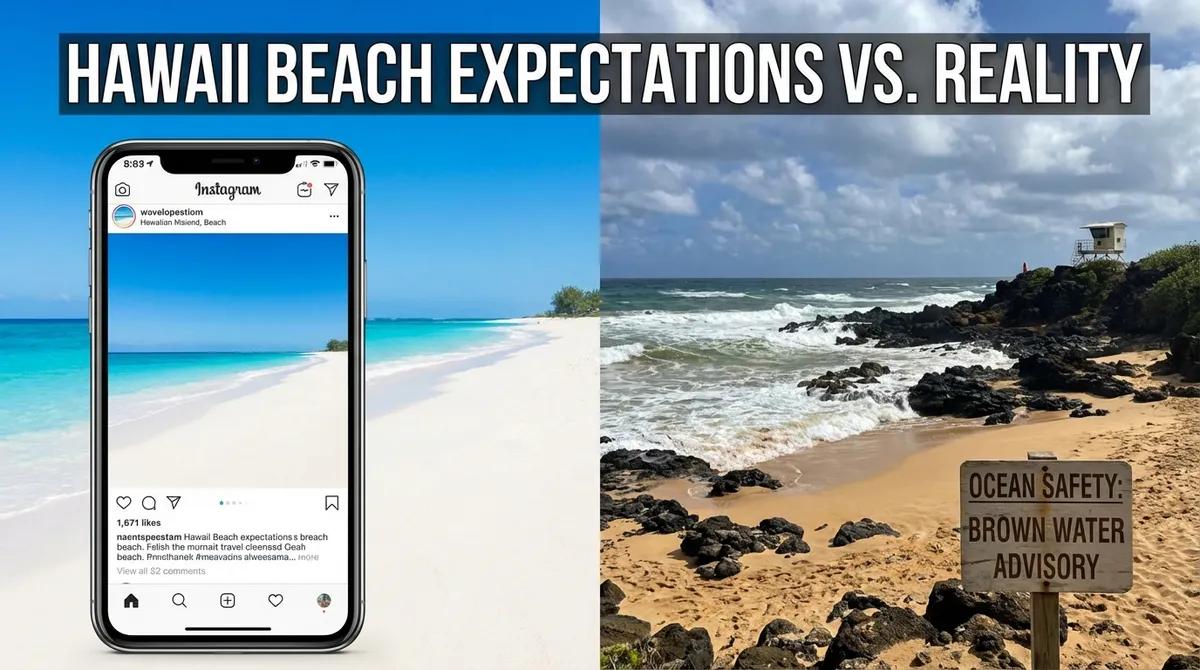
One of the most common surprises for first-time Hawaii visitors is that the beaches don't always match the ultra-white sand and crystal-turquoise water they've seen on social media. But here's the secret that seasoned Hawaii travelers know: the real beaches are even more impressive than the filtered versions. Understanding what to expect will help you appreciate the incredible diversity of Hawaii's coastlines and stay safe while enjoying them.
The Truth About Hawaii's Sand Colors
Hawaii's beaches are famous not for being uniform, but for being extraordinarily diverse. Most beaches in Hawaii feature golden sand, which has a warm, honey-toned color that looks stunning in person. This is different from the pure white sand you might find in the Caribbean or the Maldives, and it's one of the things that makes Hawaii unique.
Beyond golden sand, Hawaii offers beach colors you won't find anywhere else on Earth:
Green sand — Papakolea Beach on the Big Island, one of only four green sand beaches in the world, colored by olivine crystals from ancient volcanic eruptions
Black sand — Punaluu Beach on the Big Island, featuring striking jet-black sand formed from basaltic lava
Red sand — Red Sand Beach in Hana, Maui, with its dramatic color from iron-rich cinder
These unique beaches are part of what makes Hawaii's coastline so special and worth exploring beyond the typical resort areas.
Managing Your Expectations
When travelers ask about white sand and turquoise water in Hawaii, locals are quick to point out that Hawaii's beauty is different from tropical destinations closer to the equator. The water color varies by location, time of day, weather conditions, and ocean floor composition. On calm, sunny days, you'll find waters that shimmer in shades of deep blue, aquamarine, and yes, sometimes turquoise — particularly at spots like Lanikai Beach on Oahu or Hapuna Beach on the Big Island.
The takeaway is not to judge Hawaii's beaches by Caribbean standards. Instead, embrace the variety. In a single trip, you can walk on golden, black, red, and green sand — all surrounded by dramatic volcanic cliffs, lush tropical mountains, and some of the most powerful ocean waves on the planet.
Ocean Safety: What Every Visitor Needs to Know
Hawaii's ocean is stunningly beautiful but demands respect. Understanding a few key safety topics will keep your beach days enjoyable and safe.
Brown Water Advisories
Brown water advisories are issued after heavy rainfall, particularly during the winter rainy season. When it rains hard, runoff carries sediment, bacteria, and debris into the ocean, turning nearshore waters brown. The general rule is to wait 48 to 72 hours after heavy rain before swimming. Signs are posted at affected beaches when bacteria counts are extremely high, and you can check with lifeguards or the state's clean water website for current conditions.
Box Jellyfish
Box jellyfish are another important consideration, particularly on Oahu's south-facing beaches like Waikiki. They arrive in predictable cycles approximately 8 to 10 days after each full moon. The Waikiki Aquarium publishes a box jellyfish calendar that is incredibly useful for planning your beach days. If you do get stung, rinse the area with vinegar and seek help from a lifeguard.
Mosquitoes and Bugs
Mosquitoes exist in Hawaii but are generally more of an issue in lush, vegetated areas rather than at the beach. Deep Woods Off or similar DEET-based repellents work well, especially for the tiny biting midges known locally as no-see-ums.
Best Beaches in Oahu
Oahu alone offers incredible beach diversity:
Lanikai Beach — consistently rated among the best beaches in the world with fine sand and calm, clear water
Kailua Beach — perfect for kayaking and stand-up paddleboarding
Waikiki Beach — iconic and ideal for learning to surf
Sunset Beach & Pipeline — world-class wave watching in winter months on the North Shore
Yokohama Bay — a more secluded, quieter experience on the west side
No matter which beach you visit, remember that Hawaii's coastlines are living, dynamic landscapes shaped by volcanic forces and powerful ocean currents. That's what makes them extraordinary — and no Instagram filter can capture the feeling of standing on a beach that was literally created by fire and sea.
Real beaches, real people — the same honesty applies to our first date ideas in Honolulu.