Box Jellyfish: Hawaii's Most Predictable Ocean Hazard
Of all the ocean hazards in Hawaii, box jellyfish are unique because they arrive on a remarkably predictable schedule. Approximately 8 to 10 days after each full moon, swarms of Hawaiian box jellyfish (Alatina alata) wash onto south-facing shores across Oahu — including Waikiki Beach, one of the most heavily visited beaches in the world.
The good news? Because their arrival is so predictable, you can plan around them. Understanding the jellyfish calendar and knowing what to do if you get stung will help you enjoy Hawaii's beaches with confidence.
How the Box Jellyfish Calendar Works
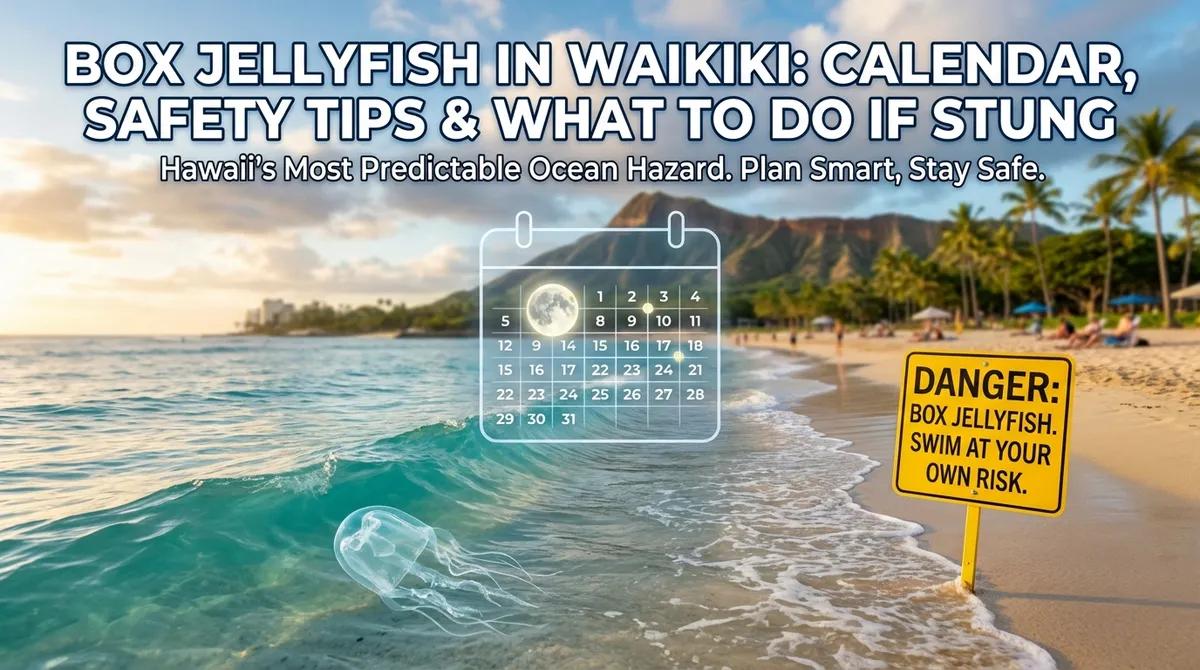
The Waikiki Aquarium publishes a box jellyfish prediction calendar each year that's become an essential planning tool for locals and visitors alike. The calendar marks the expected arrival window — typically a 3-day period each month when jellyfish are most likely to appear on south shore beaches.
The cycle follows the lunar calendar: box jellyfish mature in deep offshore waters and are carried shoreward by tidal patterns linked to the full moon. They typically arrive 8 to 12 days after the full moon, with the highest concentrations on the 9th and 10th day.
How to Use the Calendar
Check before your trip — Look up the Waikiki Aquarium box jellyfish calendar and note any warning days that overlap with your vacation dates
Warning days last about 3 days — The jellyfish typically appear for 1–3 days, with the middle day being the worst
Not every month is equally bad — Summer months (May–September) tend to see larger influxes than winter months
Mornings are worst — Jellyfish are typically most concentrated in the early morning hours when they wash in with the tide
Which Beaches Are Most Affected?
Box jellyfish primarily affect south-facing and leeward shores on Oahu. Here's a breakdown by area:
High-Risk Beaches
Waikiki Beach — The most frequently affected tourist beach; warnings are posted on the sand
Ala Moana Beach Park — Another south shore beach that regularly sees jellyfish arrivals
Hanauma Bay — Can be affected during major influxes; the bay may close temporarily
Ko Olina Lagoons — The calm lagoons can trap jellyfish that drift in
Lower-Risk Beaches
North Shore beaches — Generally not affected by the same south-shore pattern
Windward beaches (Kailua, Lanikai) — Less frequently affected, though not immune
Beaches with protective reefs — Reefs can block some jellyfish from reaching shore
What a Box Jellyfish Sting Feels Like
A box jellyfish sting is painful but rarely dangerous for most people. The Hawaiian species (Alatina alata) is far less venomous than its Australian cousin (the Irukandji), but the sting still demands respect.
Immediate burning pain — Similar to a hot whip or electrical shock across the skin
Red welts — Raised, linear marks appear where tentacles made contact
Pain peaks within 5–20 minutes — Then gradually subsides over the next few hours
Possible reactions — Some people experience nausea, muscle cramps, or headaches; these are uncommon but worth monitoring
What to Do If You Get Stung
First aid for box jellyfish stings has evolved over the years. Here's what current evidence supports:
Do This
Exit the water calmly — Get to shore and sit down; panicking increases heart rate and spreads venom faster
Rinse with vinegar — If available, pour white vinegar over the sting area for at least 30 seconds; vinegar neutralizes unfired nematocysts (stinging cells) still on your skin
Remove tentacle fragments — Use a credit card, stick, or towel to gently scrape remaining tentacle pieces off your skin; do not use bare hands
Apply hot water or a hot pack — Immerse the affected area in hot water (104–113°F / 40–45°C) for 20–45 minutes; heat deactivates the venom proteins and provides significant pain relief
Take over-the-counter pain relief — Ibuprofen or acetaminophen can help manage residual pain
Seek medical attention if needed — Go to urgent care or the ER if you experience difficulty breathing, chest pain, severe allergic reaction, or if the sting covers a large area of the body
Don't Do This
Don't rinse with fresh water — Fresh water causes unfired nematocysts to discharge, making the sting worse
Don't urinate on the sting — Despite the popular myth, urine doesn't help and may worsen symptoms
Don't rub the area — Rubbing spreads remaining tentacle fragments and triggers more stinging cells
Don't apply ice directly — Cold can increase pain; hot water is far more effective for venom-based stings
How to Avoid Box Jellyfish Stings
Check the jellyfish calendar before every beach day — This is the single most effective prevention method
Look for posted warning signs — Lifeguards post purple flags or jellyfish warning signs on affected beaches
Swim at beaches with lifeguards — They monitor for jellyfish and will warn swimmers when they're spotted
Wear a rash guard — Long-sleeve rash guards provide a physical barrier that tentacles can't penetrate
Avoid swimming early morning on warning days — Jellyfish concentrations are typically highest at dawn and decrease throughout the day
Switch to the North Shore or windward side — If the south shore has an active warning, head to beaches on the opposite coast
Don't Let Jellyfish Ruin Your Beach Day
Box jellyfish are a manageable part of swimming in Hawaii — not a reason to avoid the ocean. By checking the Waikiki Aquarium jellyfish calendar before your trip and keeping vinegar in your beach bag during warning days, you can enjoy Oahu's incredible beaches with peace of mind. And if you do get stung, remember: vinegar, hot water, and patience are your best friends.
Beach date on the calendar? Check the jellyfish window first, then pick from our first date ideas in Honolulu.