Dating in Hawaii isn't just dating somewhere warmer. The islands have their own relationship culture, shaped by local values, a deeply mixed population, and the close-knit feel of island life, and newcomers who don't understand it tend to make the same avoidable mistakes. This is a guide to the culture of dating in Hawaii: the customs, the etiquette, and the unwritten rules that locals grew up with and transplants have to learn. (If you want the practical scene, the apps, the pool, where people meet, read our companion guide on what dating in Hawaii is really like. This post is about the culture underneath it.)
Family comes first, and that's not a metaphor
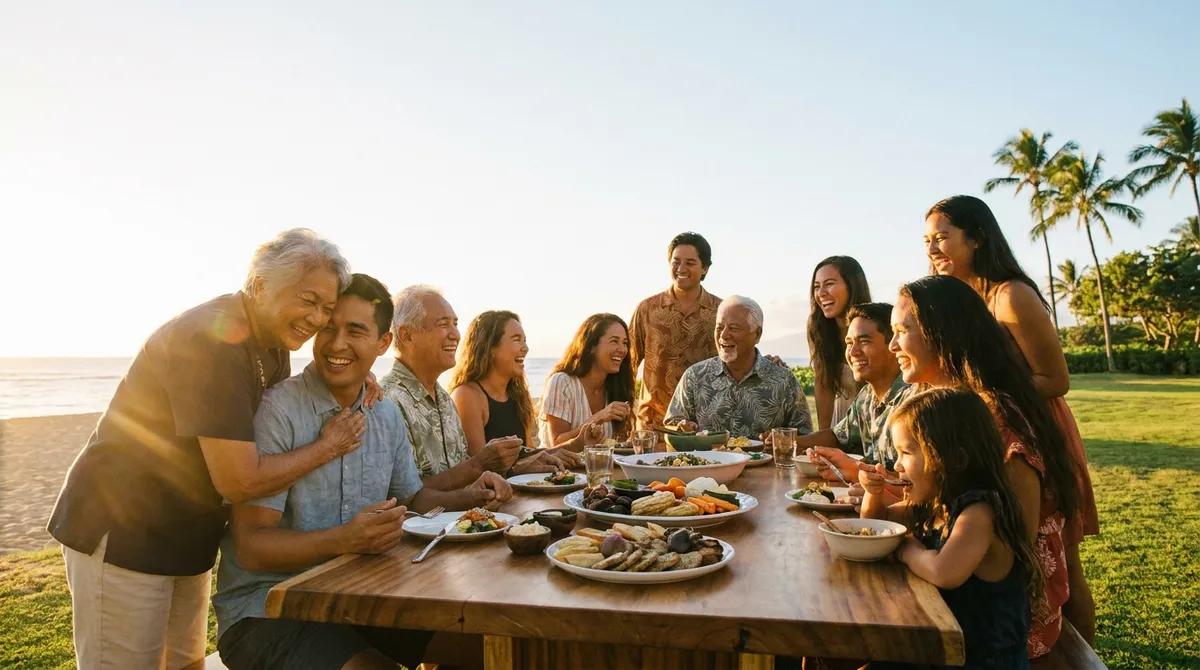
The single most important thing a newcomer needs to understand about relationship culture in Hawaii is ohana, family. It runs deeper here than on the mainland, and it shows up in dating fast. You may meet someone's cousins, aunties, and parents far earlier than you'd expect, and family approval carries real weight. Weekends often revolve around family gatherings, and a partner who doesn't fit into that fabric is a serious problem, not a minor inconvenience.
For a newcomer, the takeaway is simple: when you date someone local, you're not just dating them, you're entering their ohana. Show up, be respectful, eat the food, learn the names. Dismissing family obligations as something that competes with the relationship is one of the fastest ways to misread the whole culture.
"Local" is an identity, and you're not it (yet)
On the mainland, where you're from rarely matters much in dating. In Hawaii, "local" is a meaningful cultural identity, tied to having grown up here, often with mixed Asian, Native Hawaiian, and other roots, and it isn't the same as simply living here now. A newcomer, even a well-meaning one, is a transplant, and that carries a perception you should understand rather than resent.
This connects to the question newcomers hear constantly: how long are you here for? It can feel standoffish, but it isn't personal. Locals have watched people fall for someone who then leaves the island, so they screen for whether you're actually staying and actually invested. The cultural move that earns trust is to show, over time, that you respect the place and intend to be part of it, not to insist you're "basically local" after six months. Humility about being new goes a long way; pretending you're not new goes nowhere.
The most mixed dating culture in America
Here's a genuinely beautiful feature of relationship culture in Hawaii: it is the most racially and ethnically mixed in the country, and interracial relationships are simply the norm rather than the exception. Hawaii has the highest intermarriage rate in the United States, 42% of newlyweds in the Honolulu metro married someone of a different race or ethnicity, the highest of any major US metro, and 44% of babies born in Hawaii have parents of different races or ethnicities.[^1]
For a newcomer, this means the cultural baggage around mixed-race dating that exists in some mainland places largely isn't here. Mixed families are everywhere and unremarkable. What does matter is cultural respect and literacy, understanding and valuing the different cultures woven through the islands, rather than treating them as exotic. The norm isn't "colorblindness," it's a genuine, lived multiculturalism, and showing you appreciate it is part of dating well here.
Want to meet locals who can show you how island life really works? That's who's on HawaiiDating.net. It's free to join. Create a profile.
Pidgin, slippers, and the small things that signal respect
Culture lives in the small stuff, and newcomers give themselves away (or earn points) in the details.
Pidgin (Hawaiian Pidgin English) is a real language with deep local roots, and you'll hear it constantly. Don't mock it, don't try to imitate it for laughs, and don't treat it as "bad English." Understanding a little and respecting it as part of local identity matters.
Say "slippers," not "flip-flops." Small thing, real tell. Local vocabulary, food, and customs are how belonging gets signaled, and getting them right shows you're paying attention rather than treating Hawaii as a backdrop.
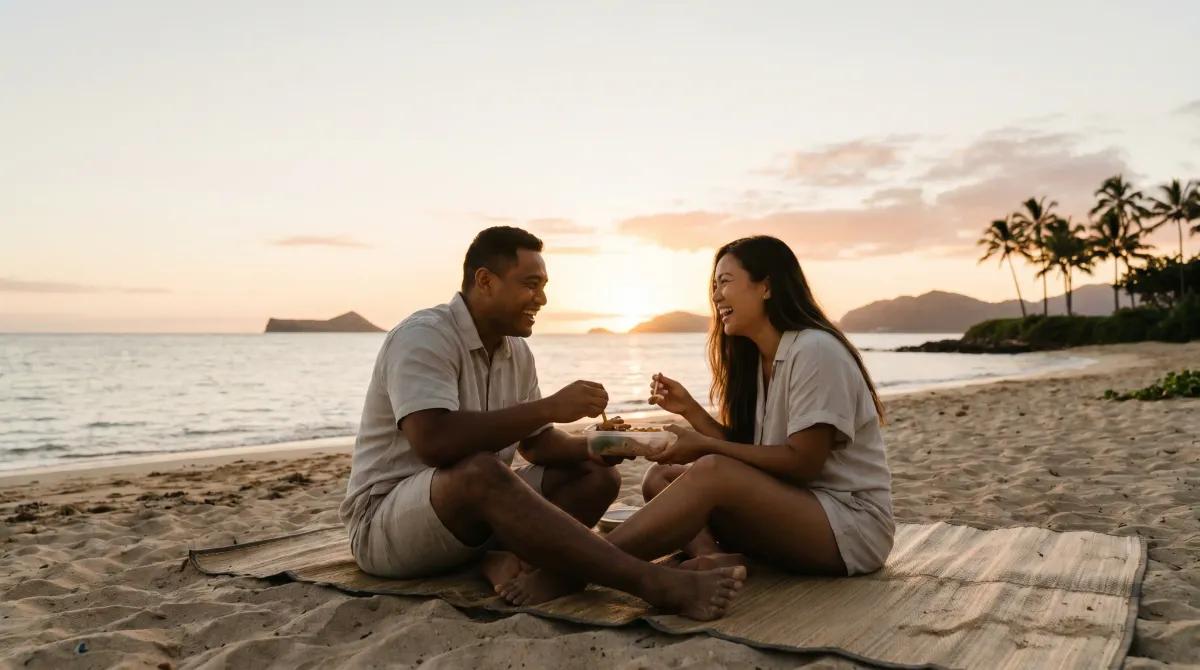
Casual is the culture. Hawaii's dating culture is low-key by default. A beach day, a plate lunch, a hike, or a coffee is a completely normal date, often more so than an expensive dinner. Showing up overdressed and over-formal can read as missing the vibe. The informality isn't laziness; it's the culture, and it lets people actually get to know each other.
Take it slow. Local relationship culture tends to move at an unhurried pace, and the small-island reality means people are careful about who they're seen with, because word travels. Patience and discretion read as respect.
The small-island effect on relationship culture
Island life shapes dating culture in a way mainlanders rarely anticipate: everyone is connected. Your date will know someone you know. Reputations travel fast on what locals jokingly call the coconut wireless. This makes the culture more accountable than big-city anonymity, people generally can't behave badly and disappear, and it makes discretion and treating people well genuinely important, not just nice. For a newcomer, the rule is simple: assume word gets around, because it does.
How newcomers actually fit in
The throughline of all of this: dating culture in Hawaii rewards people who genuinely invest in the place rather than treating it as a tropical layover. The newcomers who date well here are the ones who build real local friendships, learn the culture, respect the customs, and show they're staying. Do that, and the warmth of island culture opens up. Skip it, and you'll stay on the outside no matter how nice you are.
A practical head start: meeting locals who can actually show you the culture, not just other transplants, makes all of this easier. A Hawaii-focused platform helps you connect with people who genuinely live here and know the islands, rather than the tourist-and-transplant churn of the big national apps.
The fastest way to learn the culture is to live it. Meet Hawaii singles who grew up here and let them show you the rest.
Frequently asked questions
What is dating culture like in Hawaii? Family-centered, casual, mixed, and close-knit. Ohana (family) matters more than on the mainland, dates are often low-key (beach, hikes, plate lunch), interracial relationships are the norm, and the small-island reality means reputations travel and discretion is valued.
What do newcomers get wrong about dating in Hawaii? Underestimating the role of family, trying to act "local" too soon, treating the island as a temporary stop, missing the casual culture by being over-formal, and not showing genuine respect for local culture, customs, and language.
Is interracial dating common in Hawaii? Extremely. Hawaii has the highest intermarriage rate in the US, and mixed families are the norm rather than the exception. What matters culturally is genuine respect and appreciation for the islands' many cultures.
How important is family in Hawaii relationships? Very. Ohana runs deep, you may meet family early, family approval carries weight, and a partner is expected to fit into family life rather than compete with it.
Is HawaiiDating.net free? Yes. It's completely free to join, create a profile, and browse, and the About My Match feature helps you connect with locals who fit what you're looking for, ideal if you're new and want to meet people who actually know the islands.
Meet locals who know the islands
The fastest way to understand Hawaii's dating culture is to date people who live it. HawaiiDating.net is built for locals and people putting down roots here, not tourists passing through, it's free to join, and About My Match helps you find people who genuinely fit your life on the islands.
Create your free profile on HawaiiDating.net and meet locals who are actually here.
More local dating guides: Dating in Hawaii: What It's Really Like, the data-backed Dating in Honolulu guide, and Where to Meet Singles in Honolulu.
Sources
[^1]: Pew Research Center, "Key Facts About Race and Marriage in the U.S." (June 12, 2017), Honolulu metro intermarriage figures.