By Samuel Blacksmith, Oahu-based. Last updated August 2026.
Dating in Hawaii has its own rhythm and it's exactly what HawaiiDating.net was built for: locals only, every island, completely free.
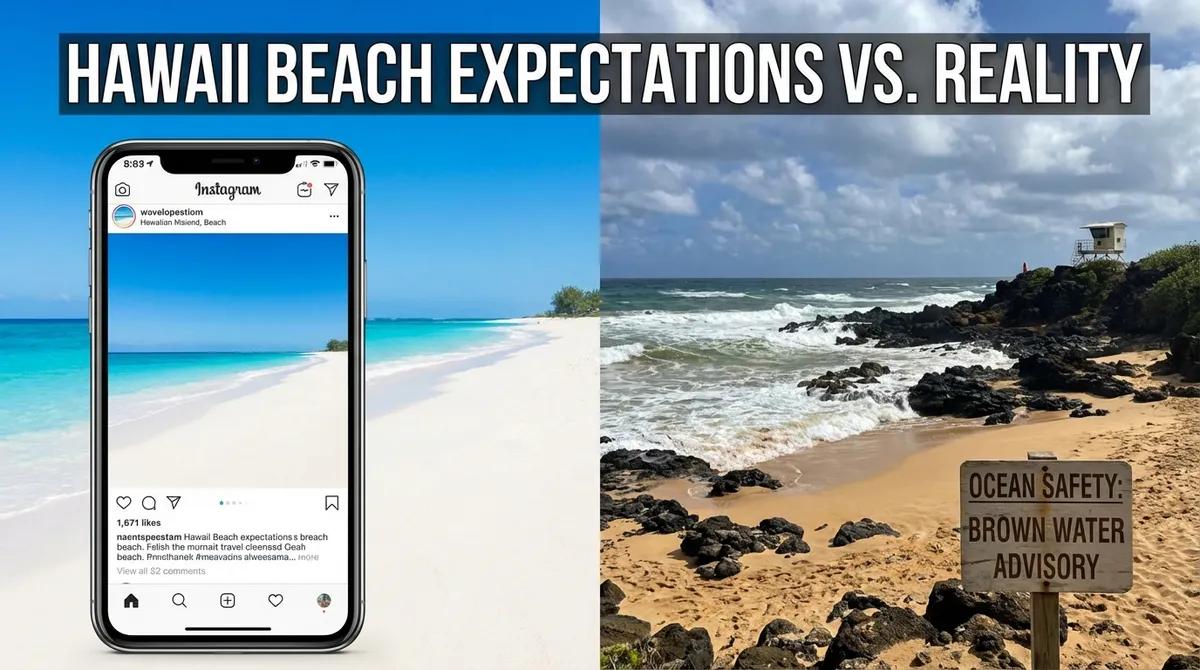
Everyone pictures the same thing when they imagine dating in Hawaii: a sunset walk on the beach, shave ice, somebody gorgeous who also surfs. The fantasy sells a lot of plane tickets. The reality, if you actually live here, is more complicated, more frustrating, and honestly more interesting than the postcard.
So here's the honest version. Not the brochure, not the doom-and-gloom either. Just what dating in Hawaii is actually like, and how people here actually find each other.
The first thing nobody tells you: the pool is small
Hawaii is a string of islands in the middle of the Pacific, and the dating math reflects that. The single most common complaint you'll hear about dating here, especially on the neighbor islands, is that the pool feels less like a pool and more like a puddle. Open a dating app on Kauaʻi or Molokaʻi and you can swipe through basically everyone in an afternoon. Even on Oʻahu, with close to a million people, it doesn't take long before the same faces start cycling back around.
There's a real reason for this beyond just geography. A lot of young, single locals leave. The cost of living pushes people to the mainland for college and careers, and many don't move back until they're older and ready to settle down near family. Meanwhile, the people moving in skew toward two groups that complicate dating: military, who rotate out in a couple of years, and transplants, who may or may not stay. The result is a dating pool that's smaller than the population suggests, and one where a lot of the people in it aren't planning to be here long.
This is the backdrop for everything else.
How big is the dating pool in Hawaii, really?
Since "how's the dating pool in Hawaii" is the question people actually ask, in real life and on Reddit, here are the honest numbers instead of vibes.
Hawaii has about 1.45 million residents (U.S. Census Bureau, 2024 American Community Survey), and they are spread very unevenly. Per the 2020 Census, Honolulu County, which is Oahu, holds just over 1 million people. The Big Island has about 200,000, Maui County about 165,000, and Kauai County about 73,000. In practice, roughly seven out of every ten potential matches in the state live on Oahu. If you are single on a neighbor island, your realistic pool is a mid-sized mainland town, minus everyone who is married, partnered, related to you, or leaving next year.
Then there is the part almost nobody on the mainland would guess: Hawaii is one of the only states where men outnumber women. Statewide the ratio runs about 99 to 101 men per 100 women depending on the Census estimate, and about 102 per 100 in Honolulu County. The skew concentrates exactly where it matters most for dating. In the 2010 Census, Hawaii counted 113.5 men per 100 women in the 20 to 29 age group, a surplus driven largely by the military bases on Oahu, and the pattern of more men than women in the younger brackets persists in current estimates. Translation: in the prime dating years, the math modestly favors women, and men face more competition here than the mainland prepared them for.
One more number that shapes everything: the median age statewide is 41.5, older than the national 39.2 (ACS 2024). Between the young locals who leave for mainland colleges and careers and the retirees who arrive, the islands skew older than the postcard suggests, which is part of why the pool in your twenties and thirties feels thinner than the total population implies.
So is the pool small? Yes, and now you know exactly how small, and in which direction it tilts. We keep a full, sourced breakdown of these numbers, singles, marriage, divorce, the gender ratio by age, and more, on our Hawaii dating statistics page. And if you want to see what the small pool feels like at its most extreme, read what dating in Kauai with a small pool is really like.
"How long are you here for?"
If there's one question that defines dating in Hawaii, it's this one. It usually comes early, and it isn't small talk.
On an island, dating someone who's about to leave is an occupational hazard. People get attached, and then orders come through, or the lease ends, or island fever hits and they move back to wherever they came from. After that happens a few times, locals get protective of their time. So the question "how long are you here for?" is really asking "are you worth investing in, or are you going to be gone by next year?"
If you're new to the islands, this is the wall you'll feel. It can come across as standoffish, but it isn't personal. It's a community that has learned the hard way not to fall for people who treat Hawaii as a layover. The flip side is genuinely good news: once people believe you're staying, the warmth is real. The barrier isn't about where you're from, it's about whether you're sticking around.
Everyone knows everyone
The other defining feature of dating here is how interconnected everything is. Date enough people on one island and the overlap becomes comedy. Your match went to high school with your coworker. The person you're seeing dated your friend two years ago. You'll recognize people from your gym, your old job, your cousin's wedding.
This has two effects. First, discretion matters more here than almost anywhere on the mainland, because word travels fast. Treat someone badly, ghost them, cheat, and the coconut wireless will make sure the next person knows before your second date. In a strange way it keeps people more accountable than the big-city anonymity where bad behavior disappears into the crowd.
Second, it makes the apps feel claustrophobic, which is a big reason locals are lukewarm on them. When you're worried you'll swipe past your cousin, the whole experience gets weird fast.
The apps: everyone's on them, nobody loves them
Let's be honest about online dating in Hawaii, because the data and the lived experience agree. Nationally, online dating is mainstream: about 30% of US adults have used a dating app, and apps are now the most common way couples meet.[^1] People here use them too, mostly Tinder, Bumble, and Hinge.
But the local experience of the big national apps is rough, for all the reasons above plus two more. In Waikīkī and the tourist zones, a huge share of profiles are visitors who'll be gone in a week, because Oʻahu hosts well over 100,000 of them on any given day.[^2] And the gender balance is skewed by the military: the active-duty population on Oʻahu is large and heavily male,[^3] which tilts the apps and means men in particular face stiff competition while women wade through a lot of "here for a good time, not a long time" profiles.
The honest takeaway most people reach: the national apps are a numbers game that wears you down, and the number that actually matters, locals who are genuinely here and genuinely looking, is buried under tourists and short-timers. That's the entire reason a Hawaii-focused platform exists. When everyone on it actually lives here, you skip the part where you fall for someone who flies home Sunday.
HawaiiDating.net is built for people who actually live in or are moving to Hawaii, not tourists passing through. It's free to join and browse. Create a profile.
What actually works here
Here's the part the postcard never shows you, and it's the most useful thing in this whole post. Ask people in Hawaii how they actually met someone good, and the answer is almost never "I swiped." It's almost always some version of "through something I was already doing."
The pattern is unmistakable. People meet through canoe paddling clubs, hiking groups, run clubs, jiu-jitsu and CrossFit gyms, co-ed softball, surf line-ups, volunteering, church groups, and friends of friends. Shared activity does the work that swiping can't, because it filters for the two things that matter most here: people who actually live the lifestyle you want, and people who are around long enough to show up to practice every week.
There's a reason "join a canoe club" is the most repeated piece of dating advice on this island. It isn't really about the canoe. It's that recurring, low-pressure, in-person contact with the same group of locals is how trust and attraction actually build in a small place. The apps can introduce you, but the activity is where it sticks.
So the move that works in Hawaii is both: use a local-focused platform to meet people who are genuinely here, and get out and do the things you love so you're meeting them in person too. The people who date well here run both tracks. The ones who rely on swiping alone burn out.
The good part, which is real
After all the honest caveats, here's what's also true: dating in Hawaii, when it works, is hard to beat.
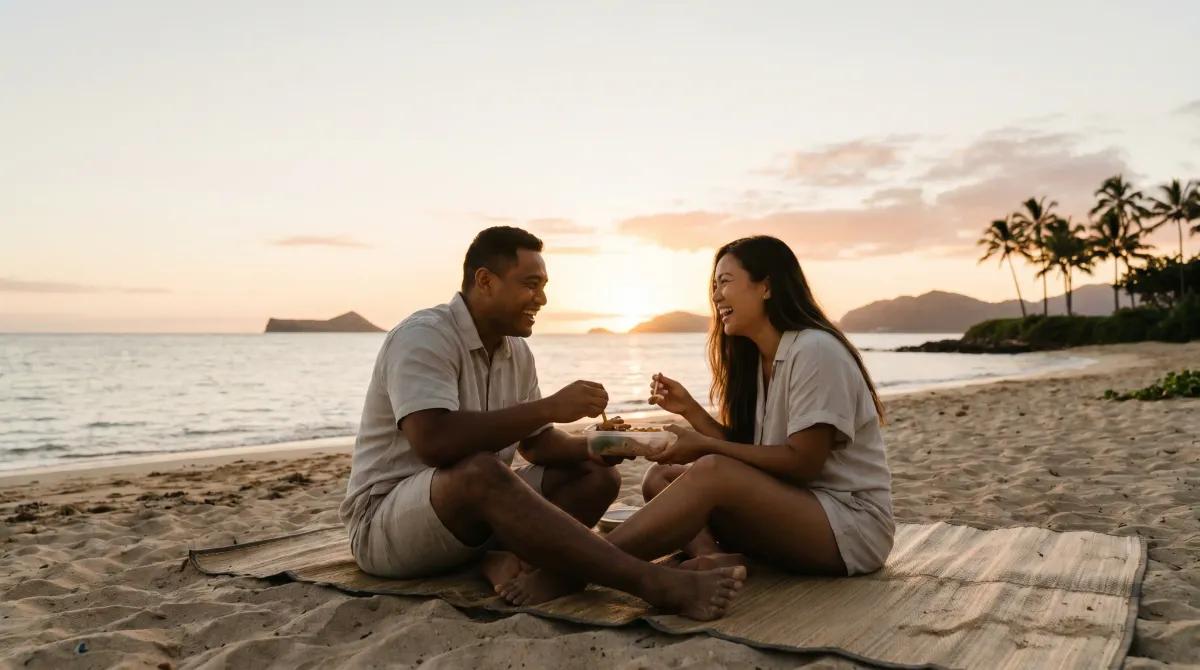
The default date here is world-class. A sunset at a beach park costs nothing. A hike to a waterfall, a morning surf session, poke on the seawall, none of it requires reservations or a budget, and all of it beats dinner-and-drinks smalltalk in a windowless bar. The islands make it easy to actually do something together, which is a better test of chemistry than interview-style dinners will ever be.
And the multicultural reality of Hawaii means dating across cultures isn't a novelty here, it's the norm. The islands have one of the highest intermarriage rates in the country,[^4] and most local families are already a blend. Whoever you are, you're not an outsider in the dating pool for it.
So, what's it really like?
Dating in Hawaii is a small pool with real currents: transient people, tight networks, tired apps. It rewards patience, genuine roots, and showing up in person, and it punishes anyone treating the islands like a backdrop. If you're here for real, whether you were born here or just committed to staying, the honest answer is that it's harder to get started and better once it does.
Meet people who are actually here to stay. Join HawaiiDating.net free, browse by your island, and skip the tourists entirely.
Frequently asked questions
Is it hard to date in Hawaii?
It can be, especially at first. The pool is smaller than mainland cities, many people are temporary (military, seasonal workers, transplants testing island life), and locals can be cautious with newcomers until they know you're staying. It gets significantly easier once you're rooted in a community.
What's the best way to meet singles in Hawaii?
A combination: a locals-focused platform like HawaiiDating.net for intentional meeting, plus recurring group activities (paddling, hiking, gyms, volunteering) for organic connection. People who do both have the best results.
Do dating apps work in Hawaii?
They work with caveats. Expect smaller pools, tourists cluttering results near Waikīkī, and fast turnover. Local platforms and in-person communities fill the gaps the big apps leave.
Is dating in Hawaii different for transplants?
Yes. Expect the "how long are you here for?" filter and some initial caution. It fades once you've shown commitment to island life. Learning local customs, driving with aloha, and showing genuine respect for local culture goes a long way, especially if you're new.
Sources
[^1]: Pew Research Center, "From Looking for Love to Swiping the Field: Online Dating in the U.S." (Feb 2, 2023). [^2]: Hawaii Tourism Authority / DBEDT, 2024 Oʻahu visitor statistics (average daily visitor census). [^3]: State of Hawaii Data Book 2022, Table 1.22 (DMDC/DEERS data, June 30, 2022), and US Department of Defense 2022 Demographics Profile (active-duty force 82.5% male). [^4]: Pew Research Center, "Key Facts About Race and Marriage in the U.S." (June 12, 2017), Honolulu metro intermarriage figure.